
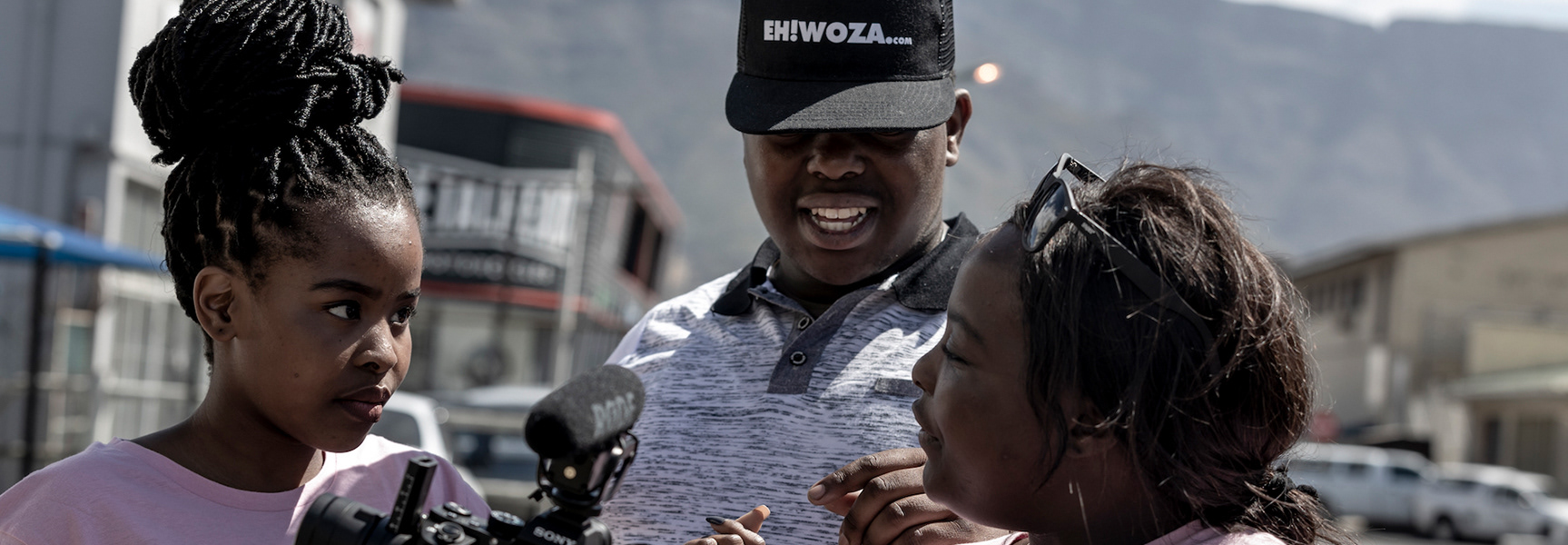
Eh!woza develops long-term collaborative projects around health, science and the social and environmental conditions that shape both. From TB, HIV and cancer to antimicrobial resistance, livestock health, flooding and climate-related disease, our work moves between biomedical research, lived experience and creative practice, combining different forms and visual languages according to context, place and the complexities that emerge.
CLIMATE + HEALTH: Working with the Climate System Analysis Group at the University of Cape Town, CASCADE and Khayelitsha residents, Eh!woza explores how flooding, water, sanitation, housing and infrastructure intersect with health. Through a series of facilitated sessions, residents identified pressing local concerns and developed the scientific questions to guide the research. The current project focuses on flooding, diarrhoeal disease and climate-related risk, combining collaborative research, collective dialogue and visual practice to connect scientific evidence with everyday experience.The work is supported through DELTAS Africa II, with funding from the Science for Africa Foundation, Wellcome and the UK Foreign, Commonwealth & Development Office.
ANTIMICROBIAL RESISTANCE + ONE HEALTH: Eh!woza worked across the rural Eastern Cape on two distinct projects exploring antimicrobial resistance through human, animal and environmental health.Through AMRoots in Lambasi, we worked alongside livestock farmers, scientists and local young people on a One Health research project investigating how antibiotics were accessed and used, and how antimicrobial resistance appeared across people, livestock, water and food. Samples were processed and sequenced in a small laboratory established within the local community, while Eh!woza led engagement and filmmaking around the science, animal health, farming practices and access to veterinary care. In Xhora Mouth, working with the Bulungula Incubator, Eh!woza developed Protecting Cultural Livelihoods, a youth-led project focused on animal health and reducing unnecessary antibiotic use. Through workshops, community co-design and documentary filmmaking, young people explored livestock care, biosecurity, traditional practices and the cultural and economic importance of animals in rural life.The projects approached antimicrobial resistance from distinct directions. One generated new scientific data within a rural farming community, while the other used local knowledge and creative practice to examine how animal health and antibiotic use were understood and managed.
EH!WOZA YOUTH: Eh!woza runs an ongoing programme of science, health and creative workshops with young people in Khayelitsha and beyond. Working with researchers, clinicians and other collaborators, sessions explore subjects including TB, HIV, cancer, mental health, antimicrobial resistance, microscopy and climate and health. Workshops combine scientific discussion, practical activities, film and conversation, creating space for young people to engage directly with research and examine it through local experience. Collaborations have included IkamvaYouth and researchers at the UCT Institute of Infectious Disease and Molecular Medicine, alongside scientists and specialists from different fields.The programme also creates pathways into longer Eh!woza projects, including Eh!woza Doccies, photography and other collaborative work.
EH!WOZA DOCCIES: The Eh!woza Doccies programme has run since 2014, bringing high-school learners and young adults into direct contact with scientists, researchers, clinicians and filmmakers. Programmes begin with intensive engagement around a specific scientific, health or social issue, followed by practical training in documentary filmmaking, research and visual storytelling. Participants identify questions, conduct interviews and film in local communities, shaping the final narratives. Past projects have explored TB, HIV and teenage pregnancy, cancer, mental health, GBV, addiction, chronic illness, access to healthcare, climate change and the social conditions that influence health.The documentaries are screened locally, shared online and used across research, education and public engagement, carrying perspectives from the places where these issues are lived into much wider conversations.
SCIENCE COMMUNICATION: Eh!woza translates complex biomedical concepts into everyday dialogue, using film, animation, image-making and conversation to bring difficult science into public life.Projects have included films, animations on mRNA and viral-vector vaccines, visual explainers on antimicrobial resistance and workshops on subjects ranging from TB and HIV to vaccines, antimicrobial resistance and other areas of biomedical research. The work combines scientific accuracy with strong visual communication, making specialist knowledge accessible beyond the laboratory, clinic and university.
PHOTOGRAPHY + IMAGE-MAKING: In 2025, Eh!woza developed Things We Left Unseen with 17 high-school learners from IkamvaYouth in Khayelitsha for the Wellcome Photography Prize. Over the course of a year, participants worked with visual artists, curators, scientists and researchers through practical workshops, gallery visits and sustained creative development. Each participant produced an individual photographic series with accompanying text, exploring one of three broad areas: mental health, infectious diseases, and climate and health. The work addressed subjects including sanitation, housing, water access and environmental change, while exploring how personal experience could be translated into images and writing. The project was exhibited alongside the Wellcome Photography Prize 2025 at the Francis Crick Institute in London, placing work made in Khayelitsha within an international exhibition examining health, science and lived experience.
RESEARCH + CO-DESIGN: Eh!woza works with research teams to fuse community engagement with the research process from the outset. Local knowledge and lived experience shape questions, methods and how findings are interpreted and shared. This work includes co-design workshops, community dialogues, stakeholder mapping, interviews and visual research across projects on TB vaccines, antimicrobial resistance, climate and health, and other public health issues.Eh!woza also works closely with scientists and researchers to develop more collaborative approaches to public and community engagement.
ENGAGED SCHOLARSHIP: Eh!woza produces scholarly work from the methods, questions and tensions that emerge through our programmes. Publications have examined how TB is understood through biomedical and lived experience, the politics of representation in public engagement media, co-production during COVID-19, ethical image-making in global health and the communication of antimicrobial resistance. Published work includes Eh!woza: intersection of art and science to engage youth on tuberculosis in Global Health Innovation, Beyond the Lab: Eh!woza and Knowing Tuberculosis in Medical Humanities, My Rhodes Has No Nose: COVID-19 and the Two Cities of Cape Town with Bristol University Press, and Reasons for Knocking at an Empty House with Springer Nature. More recent work includes Equitable Imagery in Global Health in BMJ Global Health and collaborative research on antimicrobial resistance messaging in the Journal of Health Communication.